Supreme Court Practice Directions 2020: Paragraph 11
By Admin Cook · August 21, 2026 · 4 min read
Paragraph 11 of the Supreme Court (General) Practice Directions, 2020 is the actual legal source of the tenthlining requirement for Kenya's Supreme Court. Most advocates have heard of the requirement secondhand, from a template, a colleague, or a rejected filing, without ever reading the paragraph itself. Here it is, quoted verbatim, with what it means in practice.
The text of Paragraph 11
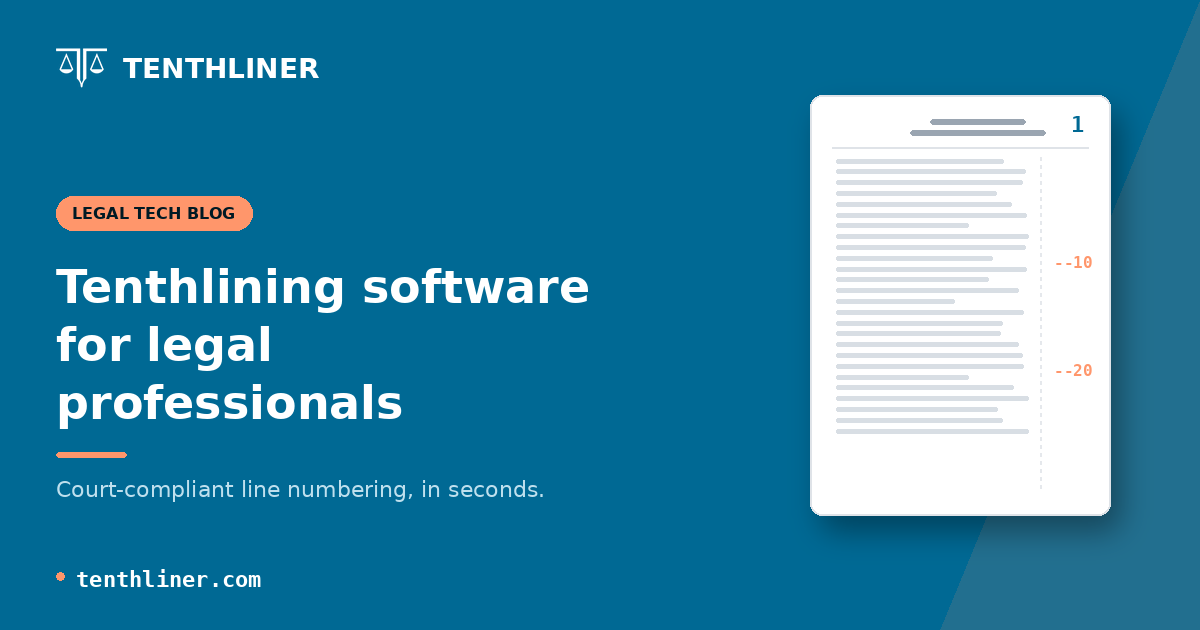
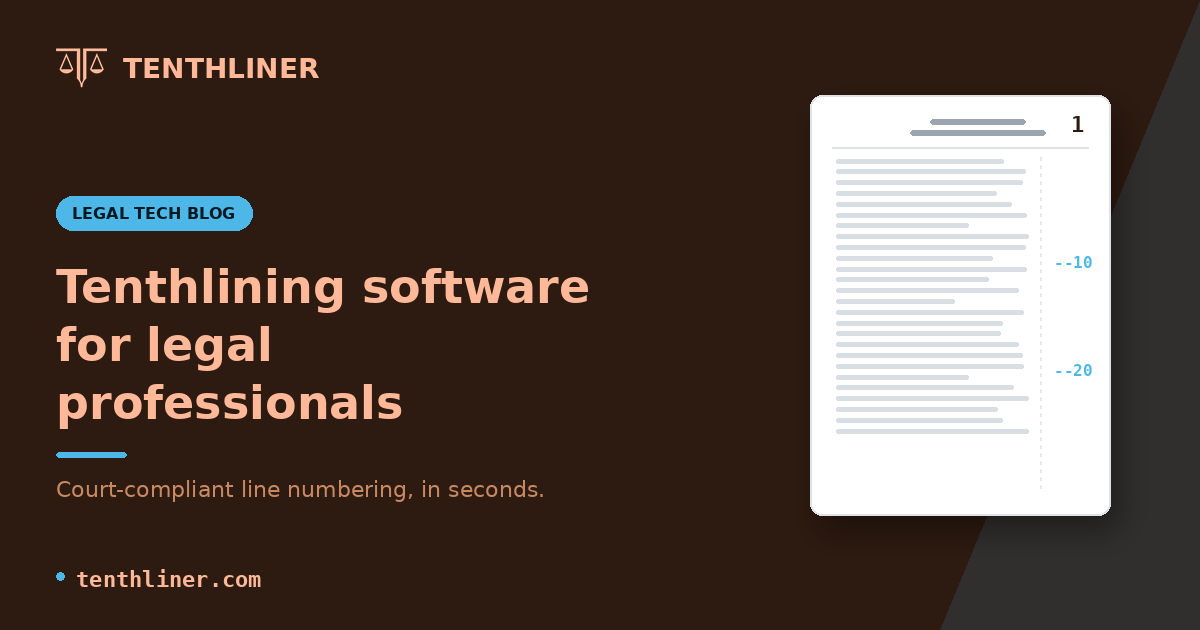
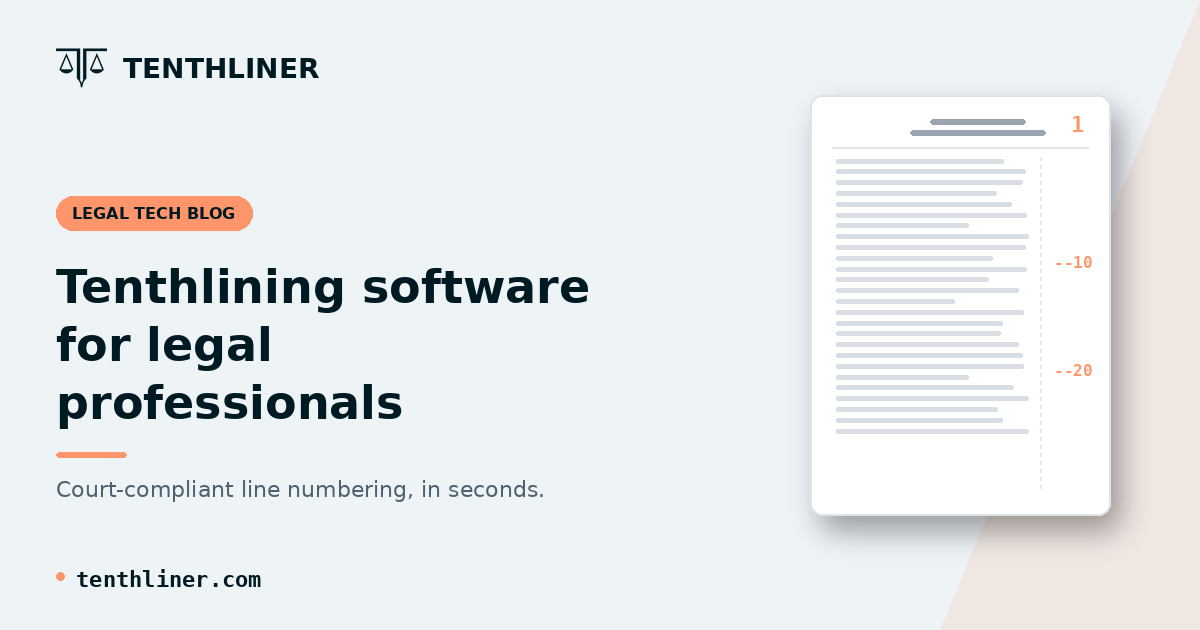
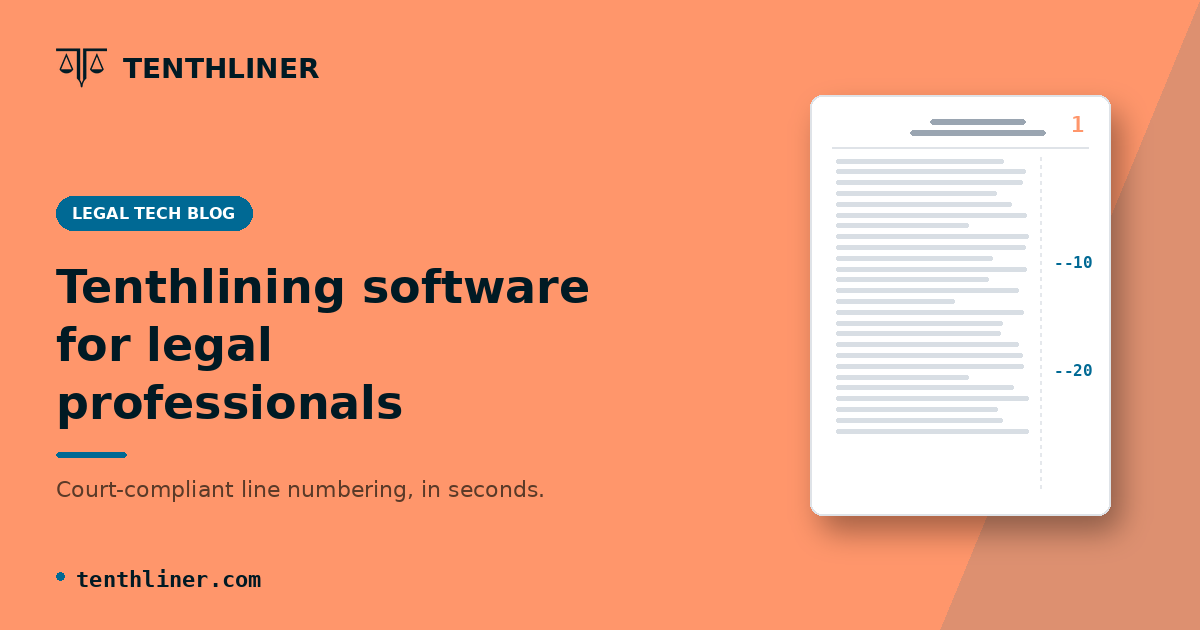
"The pages of each document shall be consecutively numbered, on the top right-hand corner and every tenth line of each document shall be numbered in sequence, on the right-hand margin."
Source: Supreme Court (General) Practice Directions, 2020, Paragraph 11, as published on Kenya Law.
Two separate requirements are packed into that one sentence, and it's worth pulling them apart, because they're easy to conflate:
- Page numbering. Every page gets a number, placed in the top right-hand corner.
- Line numbering. Separately, every tenth line of the document gets numbered, placed on the right-hand margin.
These aren't two ways of describing the same thing. A document can have correct page numbers and still fail Paragraph 11 if it's missing the line numbers, or have correct line numbers and still fail if the page numbers are in the wrong corner. Both conditions have to be satisfied.
If you want the plain-language explanation of what "every tenth line" means in practice, that is, which lines get numbered and how the count works, What Is Tenthlining and Why Kenyan Courts Require It covers that separately so this post can stay focused on the text of the directions themselves.
Paragraph 12: the formatting rule that goes with it
Paragraph 11 is usually cited on its own, but Paragraph 12 sits directly next to it and governs the document's underlying formatting, not its numbering:
"Each document shall be double-spaced, font-size 12, and template, Times New Roman font-type, with margins of no less than 3.0 centimeters on the left, 2.0 Centimeters on top and bottom and 1.5 Centimeters on the right."
Source: Supreme Court (General) Practice Directions, 2020, Paragraph 12, same citation as above.
In plain terms, a document filed at the Supreme Court needs:
| Requirement | Specification |
|---|---|
| Font | Times New Roman |
| Font size | 12 |
| Line spacing | Double-spaced |
| Left margin | At least 3.0 cm |
| Top margin | At least 2.0 cm |
| Bottom margin | At least 2.0 cm |
| Right margin | At least 1.5 cm |
Paragraph 12 is a drafting requirement, not a numbering requirement. It needs to be set correctly in the word processor before the document is converted to PDF, since it governs the body text itself, font, spacing, and page margins, rather than anything added on top of the document afterward. Paragraph 11's numbering is applied to the final PDF as the last step before filing. Getting the order backwards, for example numbering a document and then changing its margins, can shift line positions after the numbers were already placed.
Why both paragraphs matter for e-filing
A document can be rejected on the Judiciary of Kenya E-Filing System for failing either paragraph independently. A filing with perfect line numbering in the wrong font, or perfect formatting with no line numbers at all, both fail. Advocates preparing Supreme Court filings need to treat Paragraphs 11 and 12 as one combined checklist, not as two separate concerns where only the numbering gets attention because it's the more visually obvious requirement.
This is also why a format that was accepted at a different court isn't safe to reuse for the Supreme Court without checking. Each court's practice directions are their own document, and margin, font, and spacing requirements aren't necessarily identical across the Supreme Court, the Court of Appeal, and the High Court. Common Tenthlining Mistakes That Get Pleadings Rejected covers this specific failure mode, using the wrong court's format, in more depth.
Applying this in practice
Tenthliner's Supreme Court preset applies Paragraph 11's numbering format, page numbers in the top right corner, line numbers every tenth line on the right margin, automatically, so the numbering side of this doesn't depend on manually re-reading the paragraph each time. Paragraph 12's requirements (font, spacing, and margins for the document body) still need to be set correctly in your word processor before you convert to PDF and run it through tenthlining, since that governs the underlying document rather than anything added afterward.
Try Tenthliner free: 50 credits, no card required, including the Supreme Court preset built directly from Paragraph 11.